Elephant Hill
Elephant Hill Hiking and Trekking Safari in Kenya : Elephant Hill is located on the southern end of the Aberdare Ranges, about 90km of Nairobi, the elephant hill is an ideal Kenya safari location for a day Kenya hiking excursion, especially if you are preparing for the more challenging Mount Kenya or Mount Kilimanjaro climbs.
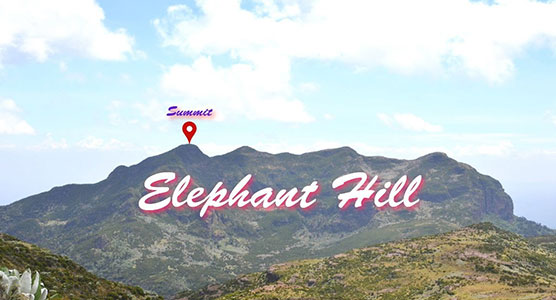
The Aberdare Ranges are situated west of Mount Kenya in the central highlands between Nyeri and Naivasha and stretch 70km long from North to South.
They are the water catchment area feeding two of the largest dams supplying over 95% of Nairobi’s water needs, that is, the Ndakani Dam in the Thika region and the Sasumua Dam near Njabini town. The Aberdare slopes are also one of the major breadbaskets for the vegetables supplied to Nairobi groceries, and possibly the most significant source of the second most important staple food consumed in Nairobi, the Irish potato.
Hiking safari and Trekking Elephant Hill in the Aberdare ranges.
Hiking safari and trekking the Elephant hill in the Aberdare ranges, Kenya is the best way to prepare for the big mountains like Mount Kenya and Kilimanjaro, though the hiking is abit challenging. below is the summary of the hill.
Distance from Nairobi: About 90km
Starting/Ending Point: Njabini Forest Gate
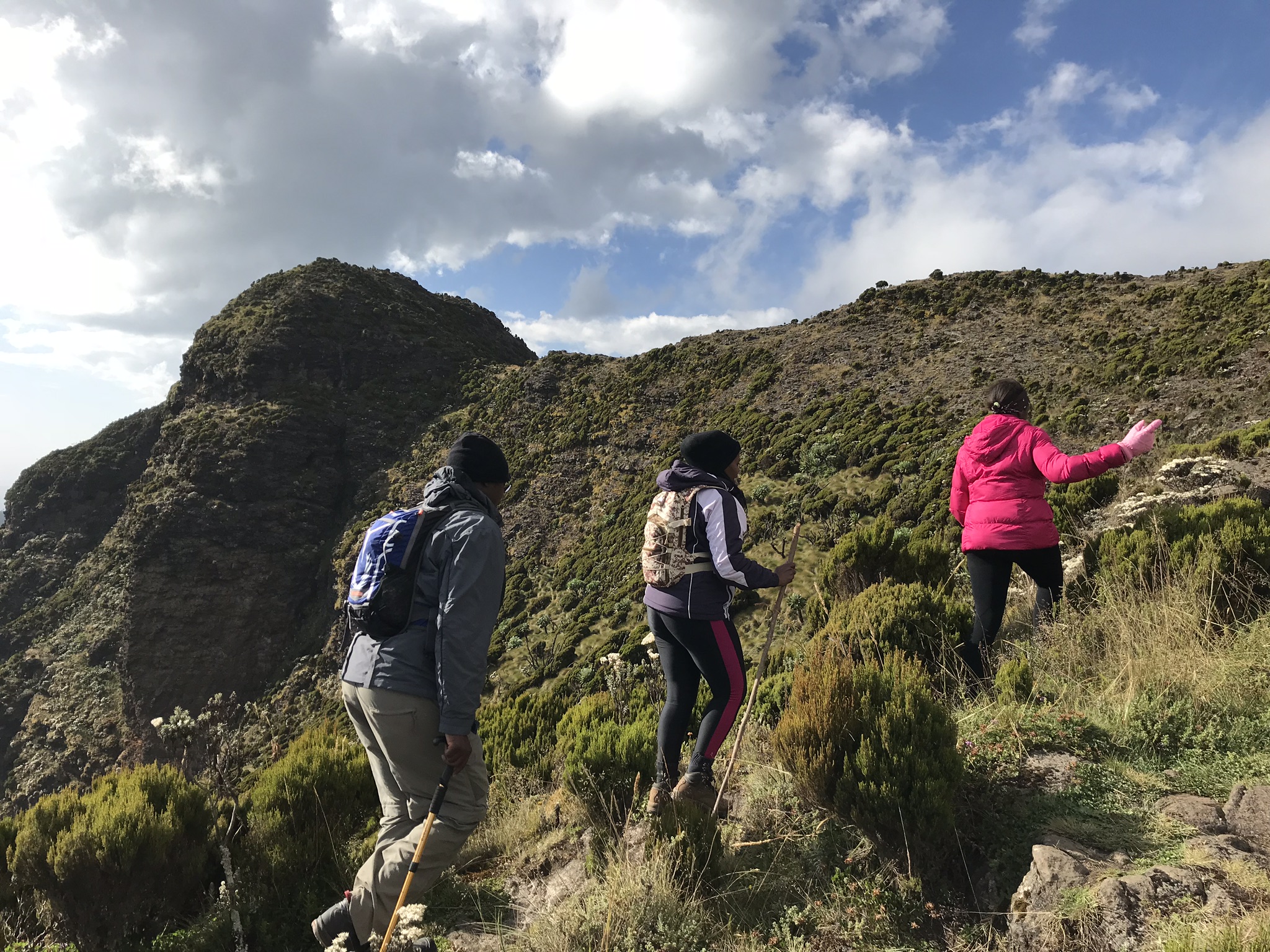
Walking Duration : 7 hours.
Terrain : Dirt road, swampy trail, bamboo zone, and rock zones.
Trek Difficulty : Moderate to High. You need to be reasonably fit to do this climb.
The Elephant Hill is located about 100km from Nairobi CBD. Elephant Hill is dubbed “the ultimate hiking destination,” and rightfully so. The “hill” presents the perfect challenge to the novice hiker looking to conquer a tougher terrain and acclimatize to a higher altitude. The 9 km Elephant Hill hike trail starts at the Njabini Forest Station gate, at an elevation of 8,202ft (2500 meters) above sea level and ends at the summit, at an elevation of 12,000 ft (3658 meters) above sea level. The entire hike up and down takes 7 to 10 hours, hiking at a moderate pace.
The first 3 km stretch features a moderately paved path, cutting through a planted forest, with the occasional flock of sheep and a few cattle revealing evidence of the human encroachment. At the end of this path is the official starting point at an elevation of 9,192ft (2,802) above sea level. A further 1.5 km trek on the Elephant Hike gives way to the Bamboo Gate (9,622 ft/2,933 meters above sea level), welcoming you into the narrow, muddy trail of the bamboo zone.
The towering bamboo canopy ensures the trail remains annoyingly wet, slippery, and poorly lit. It is important to be adequately prepared for slips and falls, so wearing comfortable, waterproof, well-treaded hiking boots is a good idea for a hiker.
The occasional mound of elephant dung and the fresh footprints constantly remind you that you are walking through a wildlife zone. So there is no need to worry; wild animals naturally keep off the trail, and anyway, you will always be accompanied by an armed guard.
The Never-End Bamboo Forest.
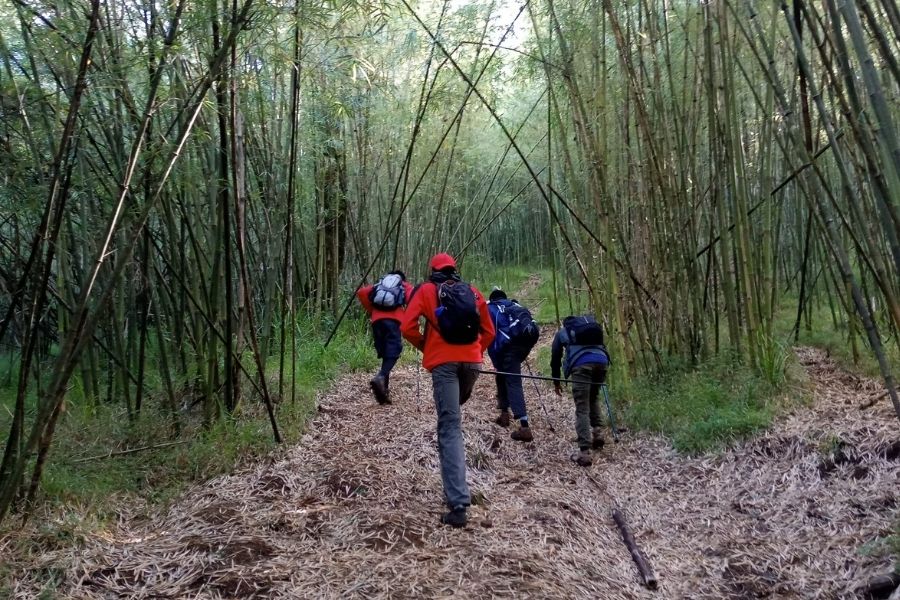
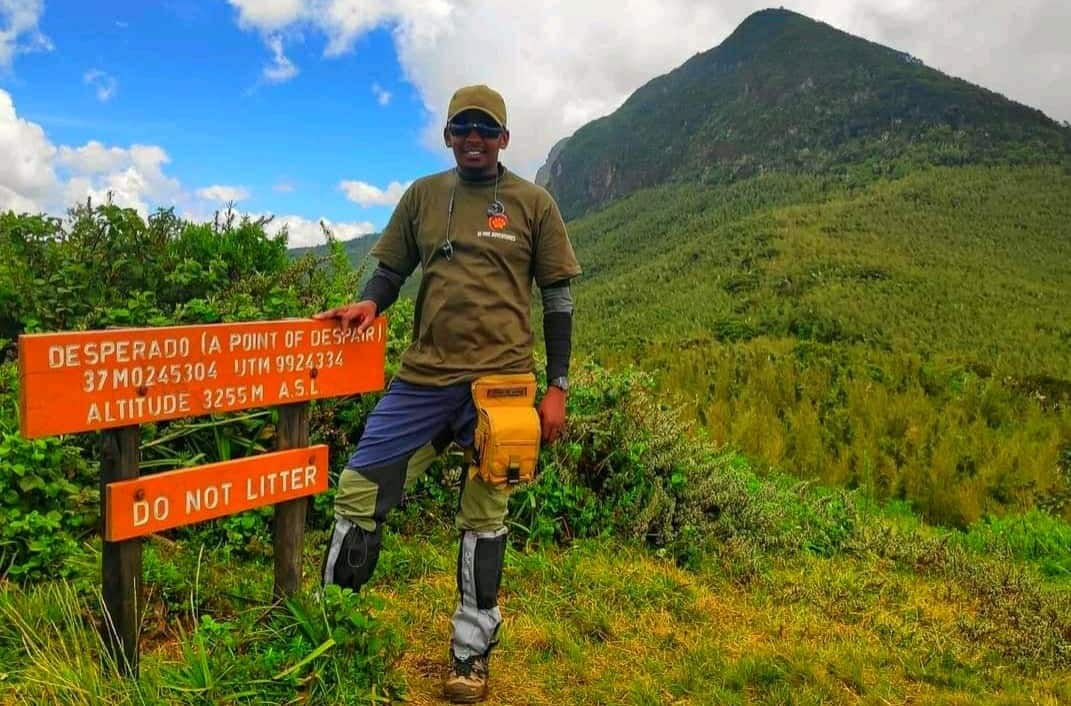
The Bamboo zone suddenly gives way to the lush moorland at an elevation of 1067 ft. (3,255m) above sea level. The leftmost hikers give up at this point; hence its uncanny name, A Point of Despair. The trail becomes tougher and tougher as you transition from the moorland to the rocky zone, which features scattered shrubs and giant lobelia. Caution is always given while trudging this terrain, as even a minor fall could cause serious injuries.
The Elephant Hill summit stands tall and mighty ahead of you when you get to the trail (11,526 ft/3,513 meters above sea level). The rest of the trail to the summit is extremely steep and equally satisfying when you conquer it; with good weather, you just might catch a glimpse of the ruins at a recent airplane crash site.
The summit gives you an unforgettable 3600 view of the scenic surroundings, including the inviting Kinangop peak, the second highest peak of the Aberdares to the North; the nearby Saumua Dam; and the famous Ndakaini Dam at a distance. The hike down is just as trying as the hike up, testing your knees’ patience against gravity and making you curse your quest for fitness. But you won’t remember the pain when you look back down memory lane.
Preparation for the Hiking safari on Elephant Hill
Clothing.
The weather in the Aberdares is always high and unpredictable, changing from warm and sunny to foggy with hailstorms within seconds; therefore, be sure to dress warmly or at least carry some warm clothes, and waterproof gaiters will also come in handy to keep mud and debris off your hiking boots. Wearing a thermal base layer is a good way to keep warm without carrying bulky clothes for the outer shell.
Footwear.
The Elephant Hill trail is mostly muddy and slippery; therefore, you are required to wear a pair of proper waterproof hiking boots with a good grip. You will be thankful when you keep your feet warm and save yourself from countless slips and falls.
Supplies.
Your body will need lots of energy while on the hiking Kenya safari; be sure to carry enough of the snacks like the nuts, biscuits, lunch bar, fruits, smoothie, and sandwich. The high altitude may take a toll on you, so be sure to carry enough water, like two or three liters, which can be enough for your hiking safari; that is, you can have your water in the hydration pack for easy carrying and sipping. That is, make sure you take your water in small sips throughout, especially when you start feeling dizzy or having a mild headache, and you can also carry painkillers just in case.
Fitness level.
The Elephant Hill is tough; you will need to be reasonably fit to get to the summit, so do not let this discourage you, though most people make it to the Point of Despair and the Tail, which are equally good milestones on the Elephant Hill Train, put this in mind: you never conquer the mountain; you conquer yourself.
Elephant Hill Charges.
| Citizens/Residents | Non-Residents |
| Adults: Ksh 250 | Adults USD 30 |
| Child Ksh 215 | Child USD 20 |
How to get to the Elephant Hill.
Elephant Hill can be accessed in various ways from the city of Nairobi to the hill.
By using the public means, you take the Njabini Matatus from the Old Nation House roundabout. Once in Njabini, the forest gate is a short 4 km further on.
If you’re driving from Nairobi, take the new Nakuru Road on the upper escarpment for about 60km to a place known locally as flyover, here you just go over the flyover across Nakuru Road. A few meters after crossing, turn left at the next junction and drive about 24km to Njabini town. The Njabini Forest Station is 4 km further.
Hiking safari at Elephant Hill Aberdares is one of the best experiences; it might be a stepping stop or decoy kind of a thing, but when it comes to Mount Kenya or Kilimanjaro, Elephant Hill is simply engrossing to Hike. Hiking is one of the best exercises you can ever have, as here you shed calories and it simply feels good and gives you a sense of achievement, especially if you make it to attain the summit.